
Lake Nakuru National Park
Background Information
Lake Nakuru is a world heritage site famous for its million plus flamingo population and an ornithologist’s heaven with over 450 plus bird species. When conditions are right, the lake offers one of the world’s most spectacular wildlife sights: brilliant pink flamingos as far as the eye can see.
The park is also home to a wide variety of wildlife such as the endangered Rothschild’s giraffe, lion, buffalo, hippo, waterbuck and baboon. The rhino breeding programme, started in the late eighties, has proved successful and this is an excellent place to view them.
With 576 square kilometers, the lake is probably internationally famous for its vast concentrations of greater and lesser flamingos, its population being in excess of a million. Their delicate pink plumage decorates certain sections of its shores to form ‘the most fabulous bird spectacle in the world’. Now with the translocation of Rothschild giraffe and rhino it is beginning to develop a new reputation although some lion, leopard and quite a few buffalo are found therein there are no elephant, however. Lesser game are in residence as are a herd of hippo which live in the north-east comer.

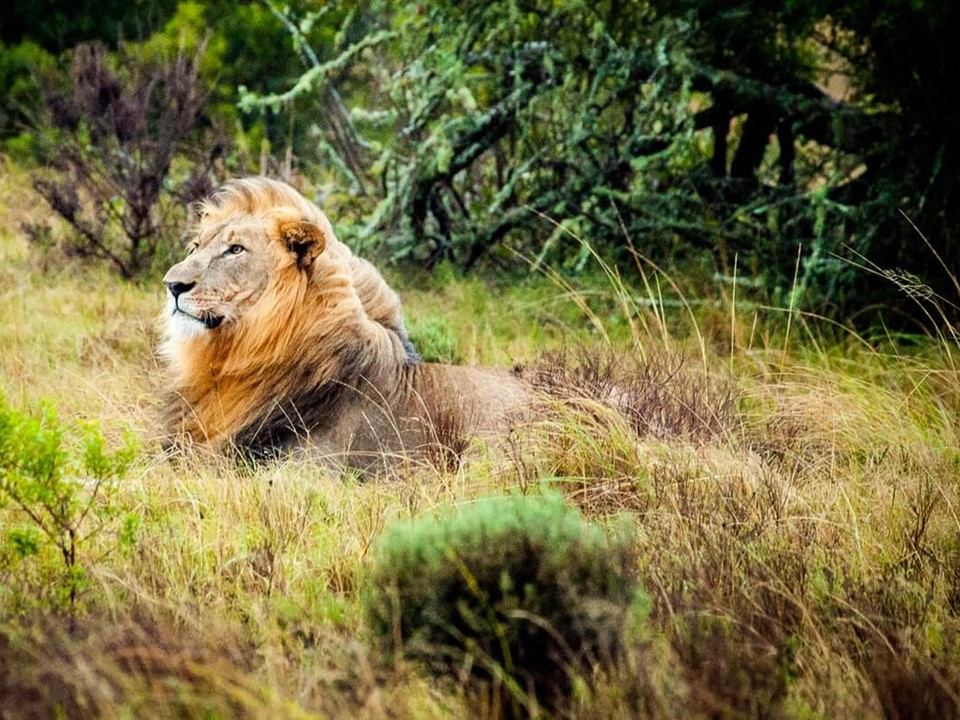
Practically most of Kenya’s wildlife is represented in the two blocks of Tsavo, but the dominant one is elephant. Over 20,000 of these giants roam the area, which also happens to be a black rhino stronghold. The park is famous for its lions, descendants of the dreaded Man eaters during the construction of the Mombasa-Kampala railway at the end of the last century.
There is network of over 800kms of game viewing roads. Bird life is legion in the park and new species are often discovered. Sunbirds, hornbills, parrot, weavers, starlings, bustards and birds of prey are present in great numbers among the many species.